Why a Psychotherapist Recommends Horse Browser for ADHD

April 1st, 2025

Daniel Jaeger is a BACP-registered psychotherapist and clinical ADHD expert who also has ADHD. Here's why he recommends Horse Browser to his clients.

398 words by Daniel Jaeger

I collect tabs like a hoarder. Thirty-seven open before I notice, each one a half-finished thought I can't find again. I'd click through them frantically, looking for the one tab I'd built an entire train of thought on. Usually I'd give up and start over.

That's ADHD. Every tab is a possibility. Every link, a distraction dressed as a breakthrough. Traditional browsers were designed for someone whose thoughts don't vanish the moment their eyes leave the screen.

Then I found Horse. Click a link and it branches off. Go deeper, another branch. Everything I've visited stays mapped out behind me. It's not a row of identical tabs; it's a map of how I actually got there. I can go on tangents without getting lost, because the path back is always visible.

Curiosity isn't the problem

I used to chastise myself for getting off task, as though curiosity was a failure. Horse changed that. My brain's way of working isn't something to correct; it's something the browser quietly supports. I stopped keeping random tabs "just in case." I stopped feeling guilty about following a thread.

Externalizing executive function

In clinical terms, this is "externalizing executive function": building systems outside the brain that reduce pressure on memory and focus. A timer on your phone. A checklist on the wall. Horse does this for research: it holds the structure of your thinking while you follow it.

I use pomodoros for time management. But once I start following links, tracking sources, mapping out ideas, timers can't hold that structure. Horse can.

What surprised me was the emotional shift. I didn't realize how much tension I carried while working online. The anxiety of losing a key source, the frustration of not being able to retrace a thought. That tension is gone now.

What my clients say

I recommend Horse to clients, particularly those in university or working on large projects. One told me it "made their thinking visible." Another stopped opening duplicate tabs out of panic, because they knew everything was still there.

Horse doesn't just support how I work. It supports why I work the way I do.

Want more?

Get on the Horse

The browser designed for ADHD minds and research workflows. Organize your browsing with Trails® and stay focused on what matters.

favicon
Japanese Green TeasGoogle Search
favicon
Japanese Green TeaWikipedia
favicon
MatchaWikipedia
favicon
SenchaWikipedia
Sencha

From Wikipedia, the free encyclopedia

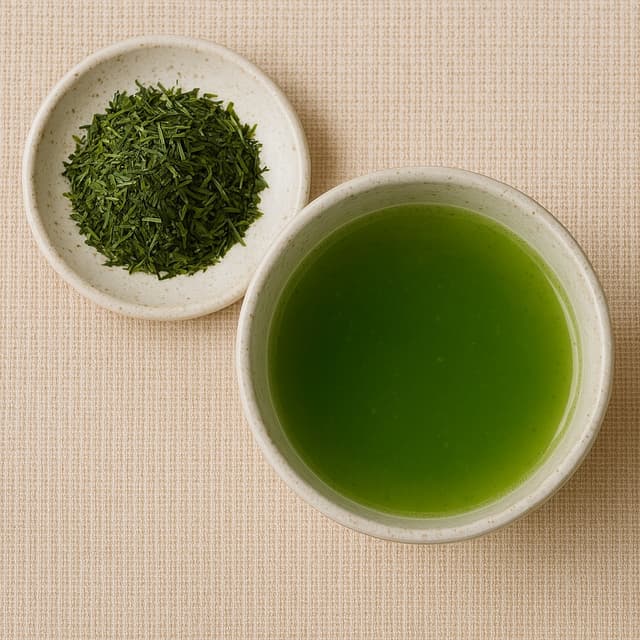
Sencha tea leaves and brewed tea

Sencha tea leaves and brewed tea

Sencha (煎茶) is a type of Japanese ryokucha (緑茶, green tea) which is prepared by infusing the processed whole tea leaves in hot water. This is as opposed to matcha (抹茶), powdered Japanese green tea, where the green tea powder is mixed with hot water and therefore the leaf itself is included in the beverage. Sencha is the most popular tea in Japan.
Types of sencha

The types of sencha are distinguished by when they are harvested. Shincha (新茶, "new tea") represents the first month's harvest of sencha. Basically, it's the same as ichibancha (一番茶, "first tea"), which is the first harvest of the year.

Kabusecha (かぶせ茶) is sencha grown in the shade for about a week before harvest. Asamushi (浅蒸し) is lightly steamed sencha, while fukamushi (深蒸し) is deeply steamed sencha.

Production

Sencha tea is made from the leaves of the Camellia sinensis plant. The leaves are steamed, rolled, and dried immediately after harvest to prevent oxidation. This process preserves the fresh, grassy flavor that sencha is known for.

The steaming process used in making sencha is what differentiates it from Chinese green teas, which are typically pan-fired. The duration of the steaming process affects the final taste and color of the tea.

Brewing

Sencha is typically brewed at lower temperatures than black tea or oolong tea. The ideal water temperature is usually between 60–80°C (140–176°F), with brewing time ranging from 1 to 2 minutes.

The tea can be brewed multiple times, with each infusion revealing different flavor notes. The first brew tends to be more astringent and fresh, while subsequent brews become milder and sweeter.

Join Our Community

Stay connected with updates, participate in discussions, and help shape the future of Horse Browser through our community channels.

Handled through Mailchimp. Unsubscribe anytime.
Horse Browser NewsletterIssue #12
rider's digest logo, a cowboy taming a horse

Turn your Browser into the Ultimate Productivity System.

You don't need a todo list, or a notes app. Your browser can do these things. But it should be more integrated than simply loading a website. This is where Horse Browser comes in, with built-in productivity features that make your browser a powerful tool.

Explore Resources

Access our comprehensive knowledge base, user manual, affiliate program details, and learn more about the team behind Horse Browser.

Pascal and Eleanor at Disneysea Tokyo

Need Help?

Access your account, manage billing, and find answers to frequently asked questions about Horse Browser.

Pascal and Eleanor at Disneysea Tokyo