Hyperfixation: what it really is (and why depth isn't the problem)

June 3rd, 2026

Hyperfixation is the intense, hours-swallowing absorption common in ADHD and autistic brains. Here's what it is, how it differs from hyperfocus, and why the problem is rarely the depth, it's losing the thread when you surface.

1,094 words by Pascal Pixel

Hyperfixation is an intense, sustained absorption in a single interest, activity, or topic, common in ADHD and autistic brains, where hours vanish and the rest of the world goes quiet. It is not laziness in reverse and it is not a discipline problem. It is how an interest-based nervous system spends attention: not evenly, by the clock, but in deep, total bursts toward whatever has captured it. And the trouble is rarely the depth. It is what happens when you come up for air.

What Hyperfixation Actually Is

Hyperfixation is a state of near-total focus on one thing, often for hours, sometimes across days or weeks, to the point where eating, sleeping, messages, and the thing you were supposed to be doing all quietly fall away. It is one of the most recognisable features of an ADHD or autistic attention style, even though it isn't a formal diagnosis in its own right.

It gets confused with hyperfocus, and the two are related but not the same. Hyperfocus is the in-the-moment state: locked onto one task so completely that time stops registering. Hyperfixation is the longer arc: the interest itself taking over, the thing you think about in the shower, the subject you've read forty articles on this week. Hyperfocus is a session. Hyperfixation is a season.

Underneath both is the same wiring. The psychiatrist William Dodson describes the ADHD brain as an "interest-based nervous system": it engages fully and effortlessly with what is interesting, novel, or urgent, and stalls on what isn't, no matter how important the boring thing is. Hyperfixation is that system at full throttle. In autistic people, the same depth shows up as the "special interest", a well-documented and often genuinely good feature of autistic cognition, the place where focus, expertise, and real joy come from. Same engine, different name.

The Problem Is Surfacing, Not the Depth

Here is the part the productivity advice usually misses. The deep dive is frequently the best thing you do all week. It is where the learning happens, where the good work happens, where you feel like yourself. Trying to stamp it out is both miserable and a waste of your sharpest mode of thinking.

The cost shows up at the edges. You have been three hours inside a subject, branching from one question to the next, and when something finally pulls you out, you cannot retrace how you got there or what you still meant to check. The thread that felt crystal-clear from the inside has evaporated, because working memory never held it. The same trait that lets you go impossibly deep is the one that makes the climb back out feel like waking from a dream you can't quite remember.

Online, this has a very specific shape. A hyperfixation rabbit hole is forty tabs deep across six tangents, and every one of those tabs felt essential when you opened it. Then the spell breaks, and you are looking at a wall of identical strips with no idea which one held the thing you actually needed, or what the original question even was. The fixation wasn't the problem. The browser losing your map of it was.

Externalising the Dive

The clinical response to this kind of cognitive load is externalising executive function: instead of asking a working memory that struggles to hold the thread, you keep the thread outside your head, somewhere it can't quietly vanish. A whiteboard externalises a project. A checklist externalises a task list. The point is the same every time, move the remembering out of the brain and into the environment.

For a hyperfixation that lives in the browser, externalising it looks like a visible map of the dive. That is what Trails are in Horse. Every link you open branches off the one you came from, drawn in a sidebar, so the path you took stays on screen behind you. Go as deep as the fixation pulls you. Follow the sixth tangent. Come back tomorrow, and the whole tree is exactly where you left it, nothing closed, nothing lost, nothing depending on you remembering. You get to keep the depth and lose the dread of surfacing.

That is the whole pitch. Hyperfixation is not a bug to be fixed. The browser that makes you pay for it with lost context is the bug. Horse is built so the deep dive costs you nothing on the way back up.

Try Horse Browser free for two weeks. Card required, cancel any time before it bills.


Common Questions

Is hyperfixation the same as hyperfocus?

Closely related, not identical. Hyperfocus is the moment-to-moment state of being locked onto a task so tightly that time disappears. Hyperfixation is the longer-running pull of an interest, the topic or activity that dominates your attention for days or weeks. You can hyperfocus inside a hyperfixation, and most people use the two words loosely. The practical difference is duration: a hyperfocus session ends when you stand up; a hyperfixation follows you around.

Is hyperfixation a sign of ADHD or autism?

Both, and it isn't exclusive to either. It is one of the most commonly described traits in ADHD and autistic attention, and AuDHD (both together) especially. It is not, on its own, a diagnosis. Plenty of people hyperfixate without being neurodivergent. If hyperfixation comes alongside other patterns, time blindness, task paralysis on uninteresting work, object permanence struggles, it is worth talking to a clinician, but the trait by itself proves nothing.

Is hyperfixation bad?

No. It is one of the genuine strengths of an interest-based brain, the source of expertise, flow, and a lot of real joy. It becomes a problem only at the edges: when it crowds out sleep and food, or when the climb back out leaves you unable to find your place. The goal isn't to kill it. It is to make the surfacing safe, so the depth stays a gift instead of a trap.

How do you manage hyperfixation without killing it?

Externalise the edges rather than fighting the focus. Set a gentle outside signal for surfacing (an alarm in another room, a body-double, a meal you've already committed to). And keep the trail of the dive somewhere you don't have to hold it in your head, notes, a brain dump, or a browser like Horse that maps the path for you. The fixation does the deep work. Your job is just to make sure you can find your way back.

Get on the Horse

The browser designed for ADHD minds and research workflows. Organize your browsing with Trails® and stay focused on what matters.

favicon
Japanese Green TeasGoogle Search
favicon
Japanese Green TeaWikipedia
favicon
MatchaWikipedia
favicon
SenchaWikipedia
Sencha

From Wikipedia, the free encyclopedia

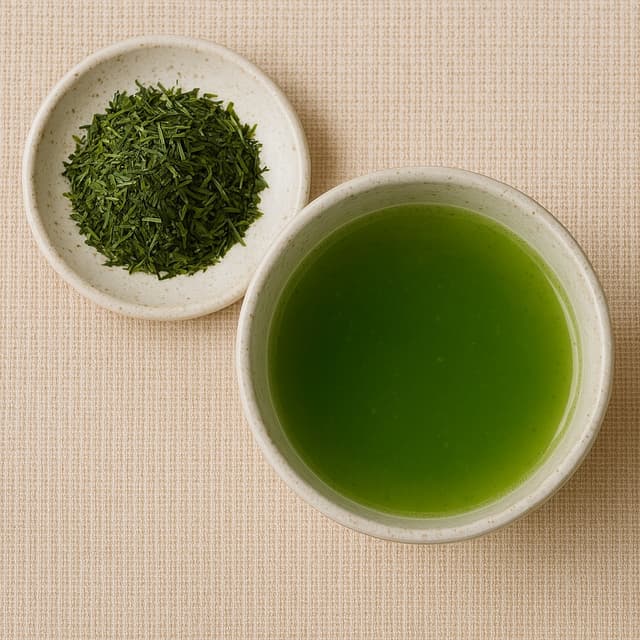
Sencha tea leaves and brewed tea

Sencha tea leaves and brewed tea

Sencha (煎茶) is a type of Japanese ryokucha (緑茶, green tea) which is prepared by infusing the processed whole tea leaves in hot water. This is as opposed to matcha (抹茶), powdered Japanese green tea, where the green tea powder is mixed with hot water and therefore the leaf itself is included in the beverage. Sencha is the most popular tea in Japan.
Types of sencha

The types of sencha are distinguished by when they are harvested. Shincha(新茶, "new tea") represents the first month's harvest of sencha. Basically, it's the same as ichibancha(一番茶, "first tea"), which is the first harvest of the year.

Kabusecha (かぶせ茶) is sencha grown in the shade for about a week before harvest. Asamushi (浅蒸し) is lightly steamed sencha, while fukamushi (深蒸し) is deeply steamed sencha.

Production

Sencha tea is made from the leaves of the Camellia sinensis plant. The leaves are steamed, rolled, and dried immediately after harvest to prevent oxidation. This process preserves the fresh, grassy flavor that sencha is known for.

The steaming process used in making sencha is what differentiates it from Chinese green teas, which are typically pan-fired. The duration of the steaming process affects the final taste and color of the tea.

Brewing

Sencha is typically brewed at lower temperatures than black tea or oolong tea. The ideal water temperature is usually between 60–80°C (140–176°F), with brewing time ranging from 1 to 2 minutes.

The tea can be brewed multiple times, with each infusion revealing different flavor notes. The first brew tends to be more astringent and fresh, while subsequent brews become milder and sweeter.

Join Our Community

Stay connected with updates, participate in discussions, and help shape the future of Horse Browser through our community channels.

Unsubscribe anytime.
Horse Browser NewsletterIssue #12
rider's digest logo, a cowboy taming a horse

Turn your Browser into the Ultimate Productivity System.

You don't need a todo list, or a notes app. Your browser can do these things. But it should be more integrated than simply loading a website. This is where Horse Browser comes in, with built-in productivity features that make your browser a powerful tool.

Read the Manual

The full user manual: getting started, basics, navigation, features, and the FAQ.

Pascal and Eleanor at Disneysea Tokyo

Need Help?

Access your account, manage billing, and find answers to frequently asked questions about Horse Browser.

Pascal and Eleanor at Disneysea Tokyo