Version v3.3.0-beta.5

Beta, released on August 1, 2026

Groundwork: extensions. More riders are using the beta now, which is excellent: they found two places extensions could still fall through the floor. 1Password’s account sign-in now opens as a proper Trail, and the full extension menu really does open from Settings.

<!-- horse-release-sha: 21ff9b91bb7b34f7198dd686f84e8b132b7fb9ce -->

  • Clicking “Add an account” in 1Password now opens sign-in as a Trail instead of flashing up a window that immediately disappears.
  • Welcome and Settings stay visible when you resize the window.
  • Saddlepack recognises more login forms, including sign-ins where the password field appears after the username step.
  • Saddlepack avoids filling account-creation and password-change fields as though they were ordinary sign-ins, and still offers to save the new password you typed there.
  • Pasting a full address into Trail exclusions now saves the correct site and keeps working over time.
  • Navigating away no longer replaces a real parent Trail title with its address.
  • More interrupted, retried, and rapidly repeated navigation keeps the correct Trail selected and preserves Back and Forward.
  • On Windows and Linux, clicking a link while Horse is closed opens it as soon as the window is up instead of waiting on the network.
  • The shelf stays open while an extension window is open, and closes when that window loses focus.
  • On macOS, one click switches between extension windows: the click that closes one also opens the next. Double-clicking the titlebar zooms again.
  • Pages that constantly create and remove embedded frames, like Feedly, no longer trigger a “Render frame was disposed” error dialog.
  • Extensions now live inside the Settings menu. Clicking Extensions opens the list, and hovering one opens its complete set of actions.
  • Trails and Saddlepack each have their own Settings screen.
  • Horse now relies on extensions for ad blocking and dark mode instead of carrying separate built-in versions. If you had dark mode switched on, Horse installs and enables Dark Reader for you once and tells you; the same hand-off uBlock Origin Lite already makes for ad blocking.
  • Extensions can now only read and touch the sites their permissions actually name. Scripts, styles, cookies, and page-visit events all check the extension’s host permissions first.

Get on the Horse

The browser built for ADHD minds. Trails® keep the task alive when a tangent or interruption carries you elsewhere.

favicon
Japanese Green TeasGoogle Search
favicon
Japanese Green TeaWikipedia
favicon
MatchaWikipedia
favicon
SenchaWikipedia
Sencha

From Wikipedia, the free encyclopedia

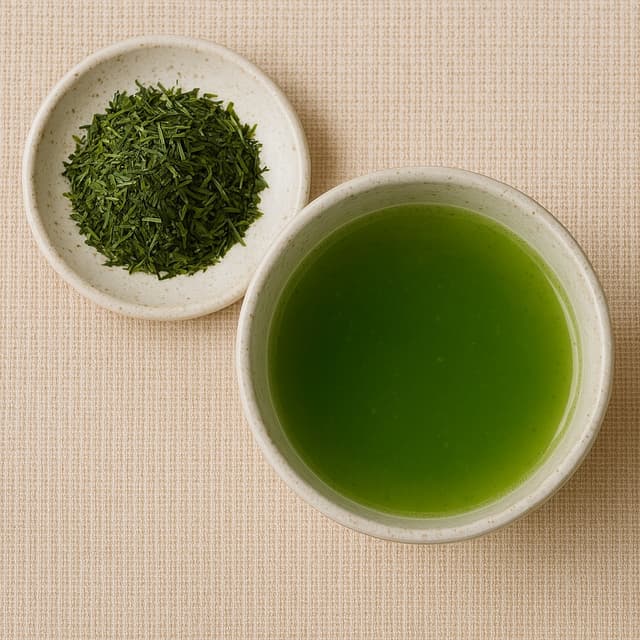
Sencha tea leaves and brewed tea

Sencha tea leaves and brewed tea

Sencha (煎茶) is a type of Japanese ryokucha (緑茶, green tea) which is prepared by infusing the processed whole tea leaves in hot water. This is as opposed to matcha (抹茶), powdered Japanese green tea, where the green tea powder is mixed with hot water and therefore the leaf itself is included in the beverage. Sencha is the most popular tea in Japan.
Types of sencha

The types of sencha are distinguished by when they are harvested. Shincha(新茶, "new tea") represents the first month's harvest of sencha. Basically, it's the same as ichibancha(一番茶, "first tea"), which is the first harvest of the year.

Kabusecha (かぶせ茶) is sencha grown in the shade for about a week before harvest. Asamushi (浅蒸し) is lightly steamed sencha, while fukamushi (深蒸し) is deeply steamed sencha.

Production

Sencha tea is made from the leaves of the Camellia sinensis plant. The leaves are steamed, rolled, and dried immediately after harvest to prevent oxidation. This process preserves the fresh, grassy flavor that sencha is known for.

The steaming process used in making sencha is what differentiates it from Chinese green teas, which are typically pan-fired. The duration of the steaming process affects the final taste and color of the tea.

Brewing

Sencha is typically brewed at lower temperatures than black tea or oolong tea. The ideal water temperature is usually between 60–80°C (140–176°F), with brewing time ranging from 1 to 2 minutes.

The tea can be brewed multiple times, with each infusion revealing different flavor notes. The first brew tends to be more astringent and fresh, while subsequent brews become milder and sweeter.

Get the Good Horse Email

One useful feature, one good story, or one meaningful update. We only send when we have something worth opening.

Unsubscribe anytime.
Horse NewsletterIssue #12

Your browser can remember the internet for you.

Drag a Trail into your notes and the whole branching path lands as Markdown. Yes, the entire tiny family tree. Computers love carrying things!

Read the Manual

Every button, shortcut, Trail, folder, note, and slightly secret Horse trick, explained plainly.

Open the Manual
Opening page of the Horse Browser manual

Need Help?

Find the answer, manage your license or billing, and get Horse back onto the Trail.

Get Help
Pascal and Eleanor at Disneysea Tokyo