Tabs keep pages open, but they throw away the relationship between them.
You click a link, follow another, get interrupted, and return to thirty little rectangles with no record of which question produced which answer. The pages survived. The task did not.
Horse takes the opposite approach. Click a link and the new page branches beneath the page you came from. Follow another and the branch continues. The whole route stays visible in the sidebar, ready for you to wander, leave, and return.
We call that route a Trail.
The computer remembers how you got there. Computers love remembering things. We have finally assigned one an appropriate job.
The laugh that started it
Years ago, I met someone selling a Chrome extension called Webscape. He wanted marketing help, so I kept asking the only useful question: what problem does this fix?
His answer was always the same.
“Tabs are broken.”
I asked why he did not fix tabs.
He laughed. “Am I Google?”
That laugh lodged in my head.
When somebody says a design is broken, I do not hear “the laws of physics have forbidden us from approaching this area.” I hear “nobody has solved the design problem yet.” Broken means unsolved, not unsolvable. We are allowed to go over there with tools.
A few days later, I stopped asking how to improve tabs and asked what had actually broken underneath them.
The answer was disappearance.
The page was gone, so the path was gone
Ordinary web navigation is built around replacement. You are on one page. You click a link. The next page takes its place. The Back button can retrieve the previous page, and history can list where you have been, but the relationship lives mostly in your memory.
Tabs let several pages survive at once. They are excellent at that. They do not preserve the reason one page produced another.
This becomes expensive the moment browsing turns into a real task.
You begin with a hotel. The hotel leads to a neighbourhood guide. The guide leads to a train timetable. A message interrupts you. When you return, the browser shows three equal rectangles and asks whether you remember what you were trying to do.
Or you begin with the dentist, encounter the insurance portal, look up a policy number, open an email, and discover that the tab containing “book the appointment” has disappeared into a civic formation of identical favicons.
The tab was the task. It did not get done.
I did not want a cleverer filing system for the rectangles. I wanted the browser to stop destroying the relationship in the first place.
So I inverted the rule.
Why navigate away at all?
Keep the old page. Open the new page beside it. Draw the connection.
The magnificent page festival
The inversion immediately creates a second problem: now there are pages everywhere.
A lot of pages!
An absolute page festival, with no apparent licensing authority and several thousand guests arriving from Wikipedia.
Fortunately, this is a smaller problem. Modern computers can hold many pages. Hierarchy can show how those pages relate. Put the route in a vertical sidebar. Nest each new page beneath the page that opened it. Let branches collapse when they are not needed.
Nothing has to vanish merely because your attention moved.
That was Trails®.
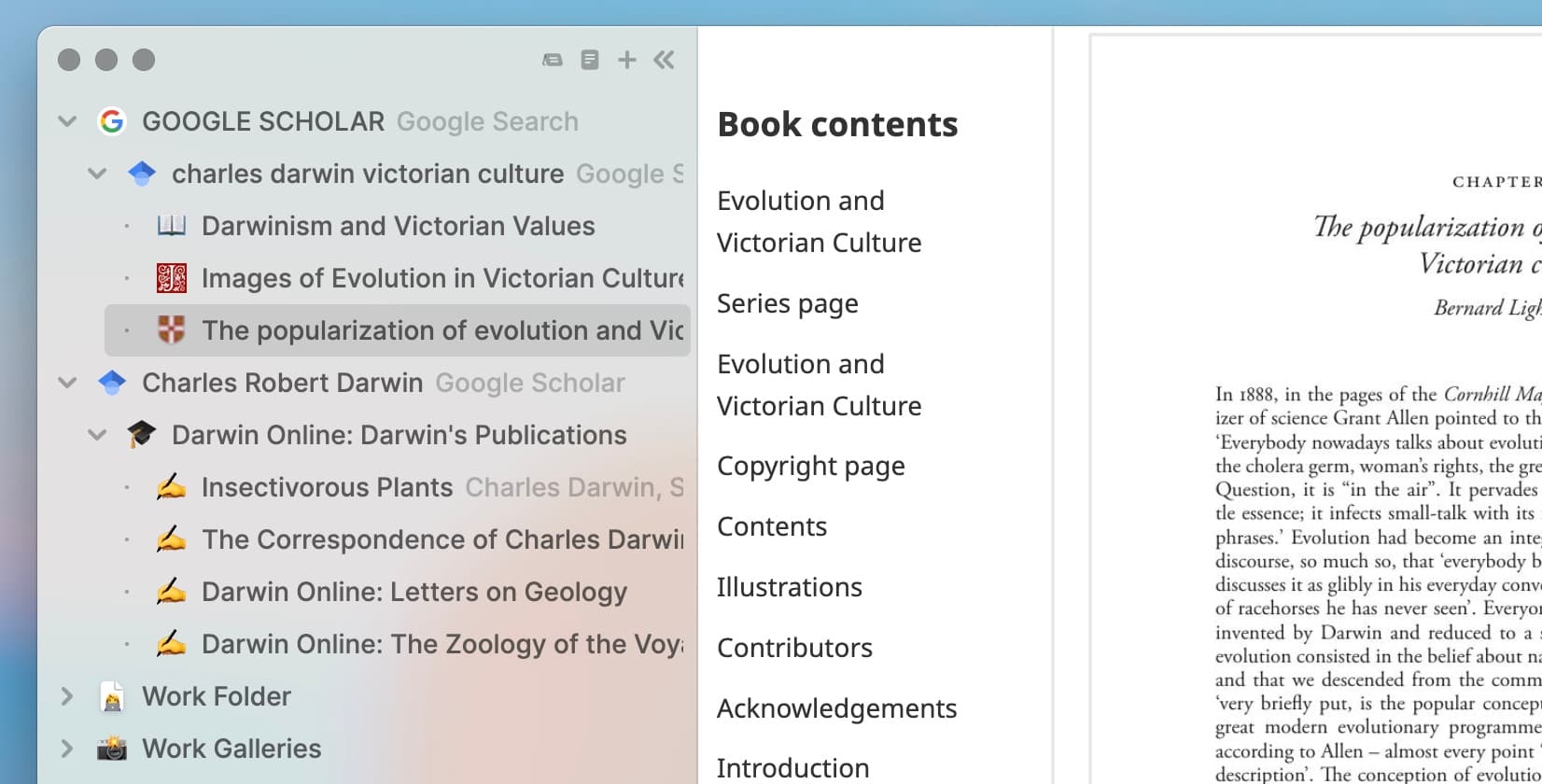
I knew almost nothing about browser history when I designed them. The older interfaces I found later were interesting, but they were not the invention story. The real path was one frustrated man saying tabs were broken, another man laughing, and my complete refusal to accept the laugh as a product requirement.
Trails® organise the act, not just the aftermath
A folder asks you to decide where a page belongs. A tab group asks you to notice that seventeen pages have become a project and then arrange them. A bookmark asks whether this page deserves permanent citizenship.
Trails® ask none of those questions while you are working.
Click a link. It branches. The relationship appears because the relationship happened.
You can rename, move, collapse, or delete branches later. The important part is that browsing already produced enough structure for re-entry. You do not have to interrupt the task to organise the task so you can continue doing the task.
This is the technological bargain I wanted: the human follows meaning; the computer carries lineage.
Not “be more disciplined.” Not “open fewer tabs.” Not a timer that blocks the website until you have demonstrated sufficient moral fibre. The browser can simply retain the context it was already holding and show it when you come back.
What a time to be alive. The machine remembers the click!
Building the browser around the idea
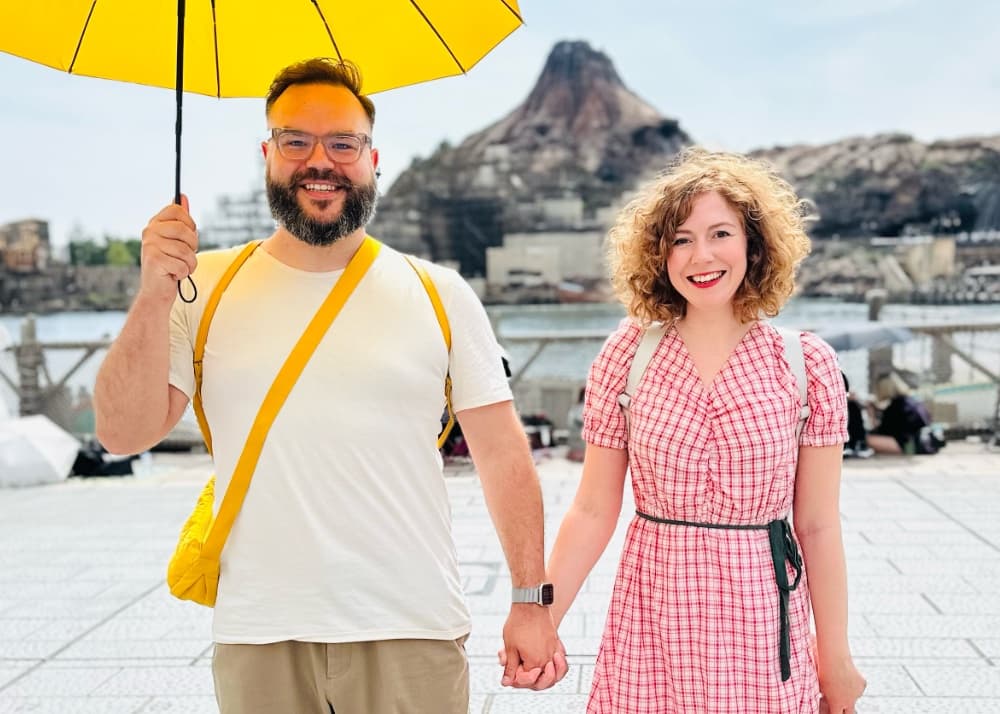
Eleanor and I built Horse for ourselves. We thought it was great. Most early users disagreed.
That part matters. This was not an immaculate product vision descending into the world while a choir of product managers held one sustained note. Trails® were a strong idea surrounded by all the other things a browser has to do: render websites, handle downloads, remember passwords, update safely, work across operating systems, and feel trustworthy enough to contain somebody’s day.
We kept building the browser around the idea. Early Riders lived without multiple windows and third-party extensions while those pieces caught up. We fixed the small behaviours that make software feel human: which page should become active after another closes, where a background branch should appear, what the sidebar should remember when it opens again.
The more natural the result feels, the more decisions have disappeared underneath it. That is good interface design. Nobody opens a browser hoping to admire the state-management strategy. They want the dentist appointment to remain alive after the interruption.
The part we understood later
Over roughly two years of conversations, another pattern became hard to miss: the people who stayed disproportionately had ADHD.
So did I.
I had been diagnosed in 1996, but I never engaged with the diagnosis or learned what ADHD meant. I thought of myself as a happy, talkative, jolly person who happened to leave a great many unfinished things around the place.
I went looking for an explanation.
Daniel, a psychotherapist who uses and recommends Horse, helped me understand the design: Horse moves a browser-sized piece of executive-function work out of memory and into the interface.
That explanation opened everything else. It also revealed that my own ideas about ADHD (reduce distractions, plan better, force yourself) were the same pop-science assumptions everybody else had absorbed.
This is not the story of an informed founder setting out to treat ADHD. Horse is not treatment. It changes one browser condition: context that would normally disappear remains visible.
You can get pulled away and return without reconstructing the entire task from memory. You can follow a useful tangent without sacrificing the page that gave it meaning. You can set a branch down and come back while the relationship remains intact.
Horse puts part of the browser’s organisational demand on the screen. The work remains yours. The avoidable remembering does not have to be.
A browser should enlarge curiosity
The internet is the largest strange library humanity has ever built. It contains every practical answer, several million exceptional distractions, and enough niche expertise to repair a washing machine from the deck of a ferry.
The answer is not to make that world smaller until a person can survive the interface around it.
Build a better interface.
Let curiosity branch at full size. Let the original task remain visible. Let somebody leave for a meeting, a meal, a child, a telephone call, or a completely necessary investigation into medieval spoons, then return without beginning from ash.
That is what Eleanor and I accidentally built, then finally learned how to explain.
Your task gets a route home. Your curiosity keeps its magnificent range. The computer carries the map, looking tremendously pleased with its promotion.
Try Horse free for two weeks. Follow something interesting, close the laptop, and come back tomorrow. The Trail will still be there.