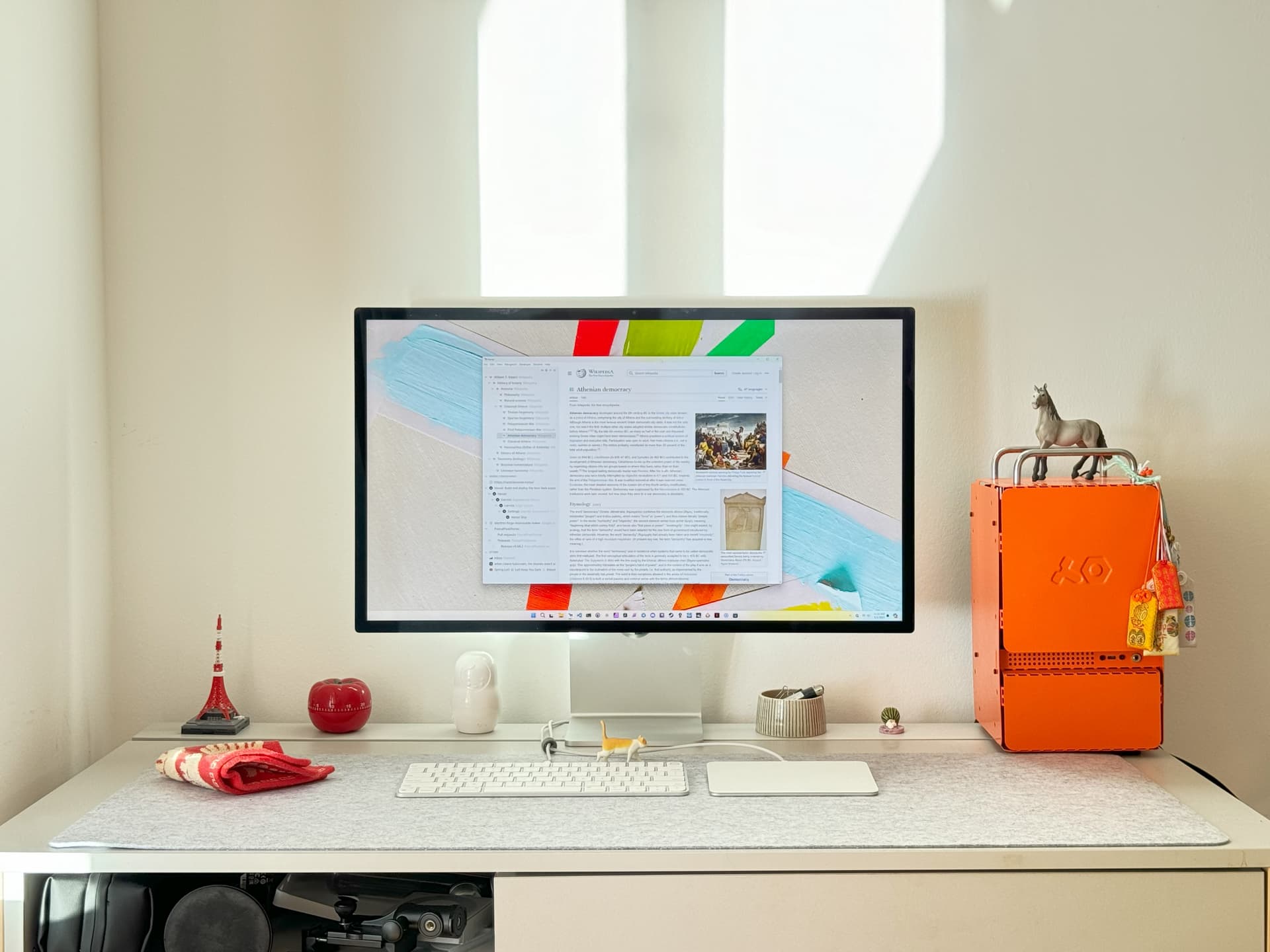
Hello Riders,
Why we needed a PC
Elly and I constantly use Horse ourselves. This is called “dogfooding,” although the dog has filed a formal objection. It is how you find the bugs nobody reports: the ones that are not dramatic enough to produce an email but are irritating enough to make somebody quietly reopen Chrome.
At the beginning of 2024, I could test Horse on macOS and Linux. What I did not have was a modern Windows PC. A Windows-only bug would arrive, I would nod sympathetically into the void, and the bug would remain magnificently Windows-only.
I needed to acquire the power of the ancients. The red-hot technology covered in fans known as x86_64.
But I refused to acquire it in one of the enormous RGB-lit metal coffers commonplace at gaming altars across the land.¹ I needed something adorable. Something colourful. Something I would not be embarrassed to place beside a small ceramic pig.
Thus, after some scheming: Orangeboy. A mini-ITX PC with the sort of mid-range processor and low-profile graphics card a normal Windows Rider might own. Small enough to ignore. Powerful enough to do the job. The right shape.
Building Orangeboy
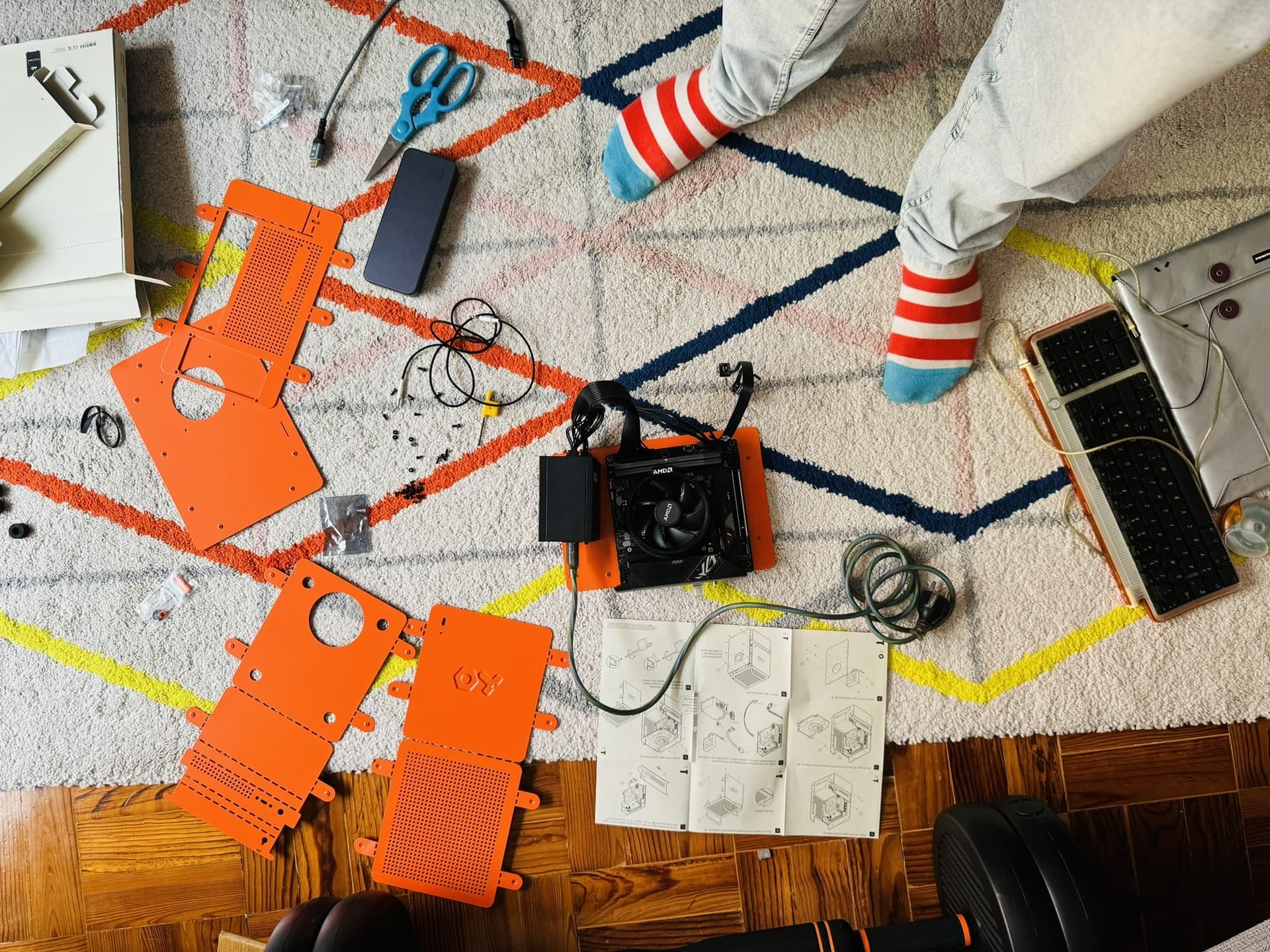
I shared the build photos on Reddit. I went in mildly worried, since my last hands-on PC experience involved opening an IBM i386 in the early 1990s with a screwdriver and the optimism of a child who did not yet know about static electricity.
The local computer shop was certain this tiny case could never make a good PC.² I left politely, opened the internet, and proceeded with ChatGPT as my chaperone, confirming whether each component would, you know, physically fit.³
The case arrived as flat orange metal panels. Teenage Engineering expected me to bend them into a computer enclosure myself. This is either industrial design at its purest or a very expensive way to sell someone the sensation of working in a small factory. I loved it immediately.
The build worked.
I carried the finished computer back to the same shop with one hand. The staff plugged it in, watched it start, and moved directly from doubt to praise. I accepted this with the dignity of a small ceramic pig.
The components
- Case: Teenage Engineering Computer-1
- Power supply: Cooler Master V750 SFX
- Motherboard: ASUS ROG Strix B650E-I
- Processor: AMD Ryzen 5 7600
- Memory: Corsair Vengeance DDR5, 32 GB
- Storage: Samsung 980 Pro M.2
- Graphics: Gigabyte RTX 4060 Low Profile
There are more powerful computers. There are smaller computers. There are computers containing enough rainbow light to guide ships into harbour. Orangeboy occupies the correct point on every axis.
Switching to Windows
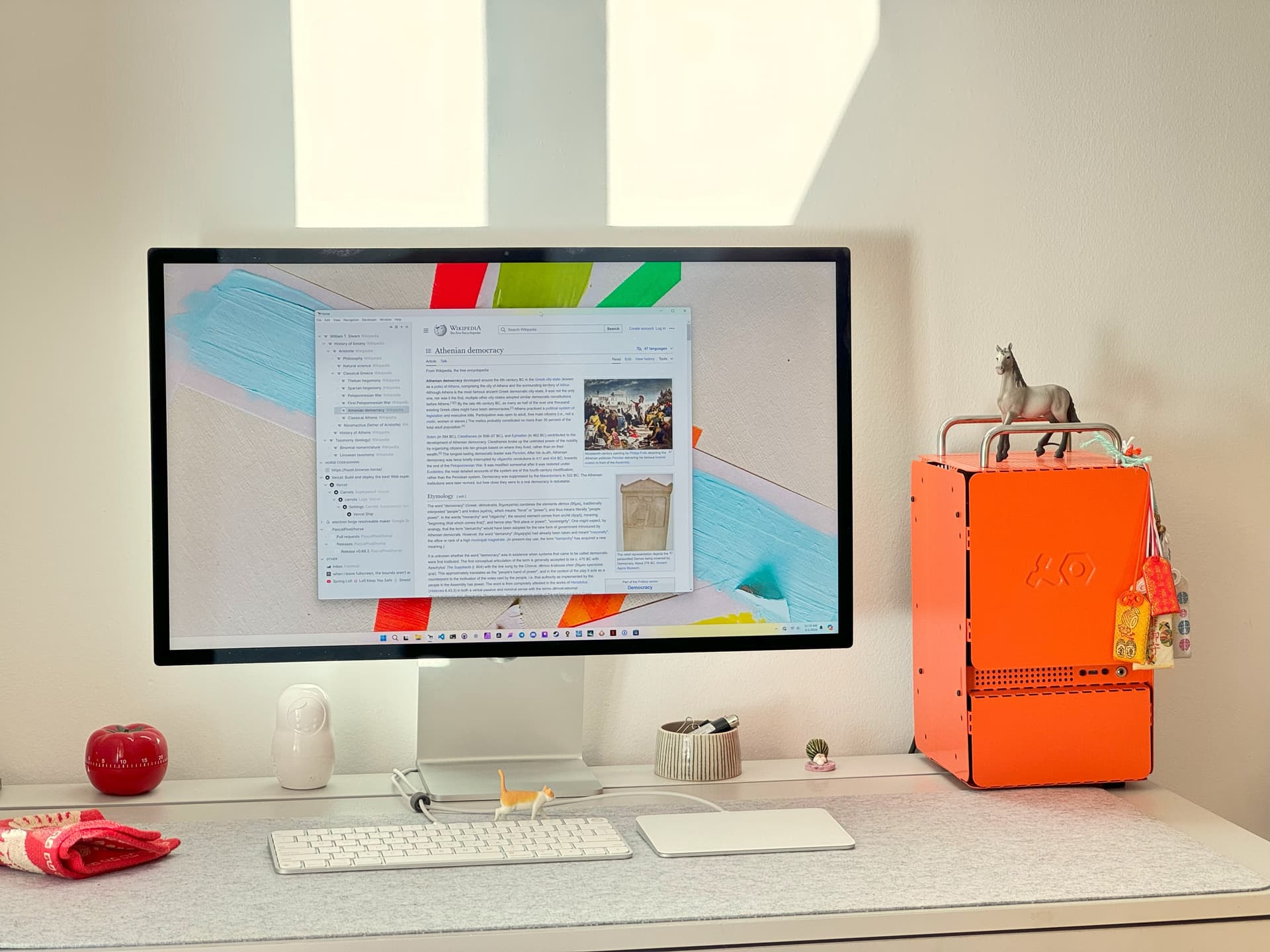
Moving from macOS to Windows revealed how much of an operating system lives below conscious thought. The keyboard shortcut moves from Command to Control and your pinky files a workplace complaint. The mouse has a different weight. Window management feels like negotiating with a building inspector.
I also acquired a fresh respect for Microsoft’s commitment to backward compatibility. Very old programs still run. Very old interfaces still exist. That creates some spectacular development archaeology for Horse,⁴ but it also means people can keep using software they bought years ago. Continuity is valuable even when the route to it passes through a corridor last decorated in 2003.
The truly cursed part was code signing. A third-party verification company asked us to drop a pin on Google Maps to prove our business location, as an alternative to consulting the public business registry of an actual sovereign nation.⁵
The pin was dropped. The certificate was issued. None of this was made up.
What Orangeboy changed
Orangeboy gave Horse a proper Windows environment. I could see the different title bar, the different window behaviour, the graphics peculiarities, and the bugs that only appear when a browser meets decades of Windows history at speed.
This is the unglamorous bargain behind cross-platform software. You cannot meaningfully care for a version you only encounter through screenshots and sympathetic nodding. You need to live in it. You need to notice the one-pixel wobble on an ordinary Tuesday and become unable to think about anything else until it is gone.
Orangeboy made that possible. A tiny orange computer took a whole operating system from “somewhere Riders report bugs” to a place Horse could be used, tested, and improved every day. That is an excellent amount of civilisation for one adorable box to carry.
The completely necessary secondary test
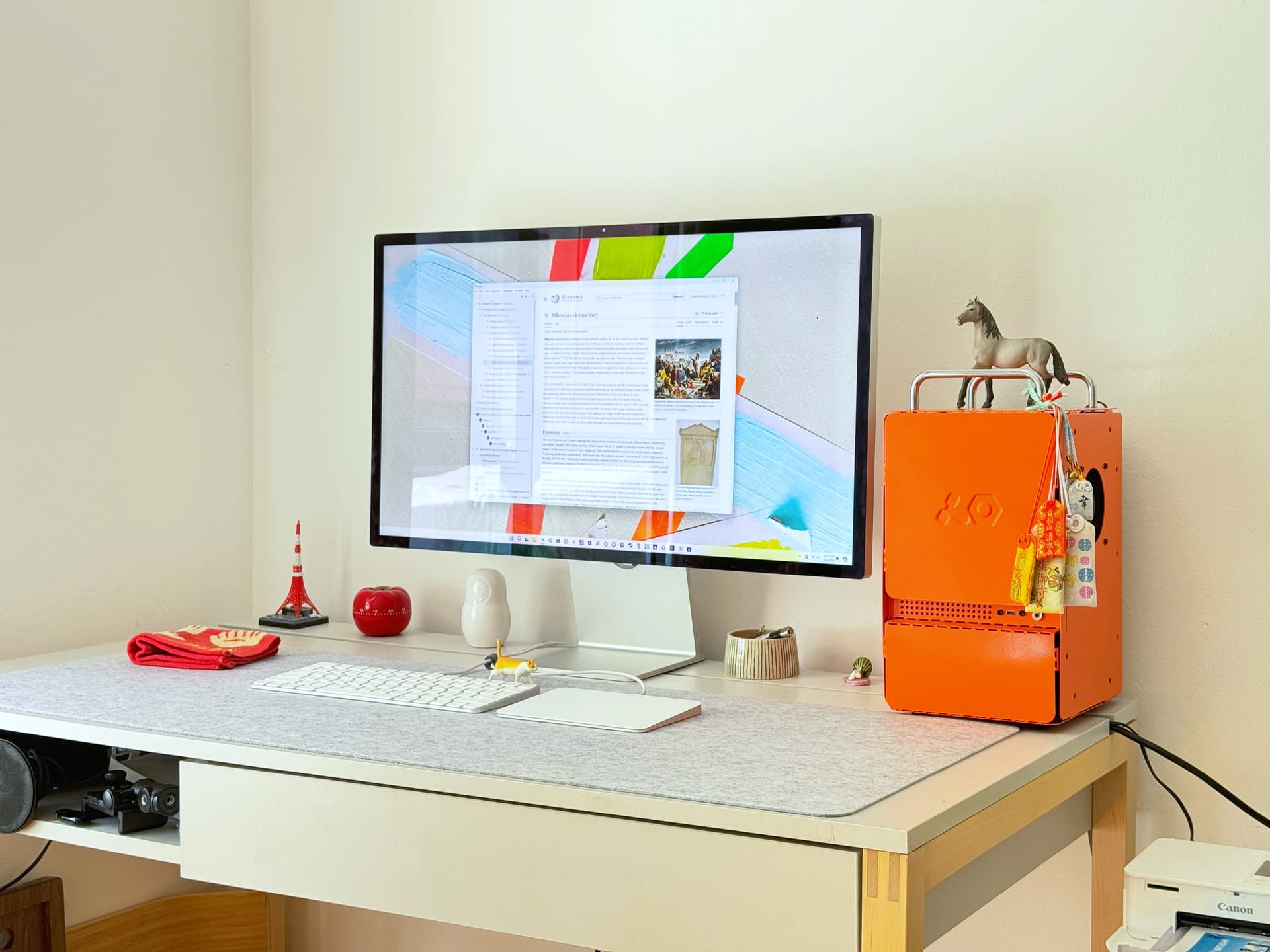
Despite its modest specifications, Orangeboy also ran Baldur’s Gate 3 at a crisp 5K and 60 frames per second. Most of that was AI upscaling persuading the monitor that a much more expensive graphics card had arrived.⁶
The illusion was excellent. We are basically living in the future.
Building Orangeboy worked the IKEA effect on me with terrifying efficiency. By assembling the thing myself, I have been brainwashed into loving it. I would defend Orangeboy in court. I would die for Orangeboy. None of this was the goal, but I am here for it.
The goal was a proper Windows test machine for Horse. We got that, plus a small orange son who sits on the shelf and glows whenever his father has forgotten to fix something.
This is why we build things.
Catch you on the Trail,
Pascal
Notes & references
- “Have you considered the NZXT H7 Flow with twelve RGB fans?” Yes. No. Get out.⤴
- “That small case can never be a good PC! You cannot even buy fans that small!”⤴
- This is, I am told, a deeply uncool way to build a PC. I do not care.⤴
- We encountered old window-sizing offsets that changed the dimensions Windows reported to the app. Someone made a decision. Decades later, the decision was still in the room.⤴
- There was a pin. There was a Google Map. There was a moment of staring at the screen and wondering whether governments had been replaced by Google Reviews.⤴
- An RTX 4060 Low Profile is not, in any reasonable sense, a 5K-at-60-frames card. DLSS was doing dishonest, beautiful work.⤴